

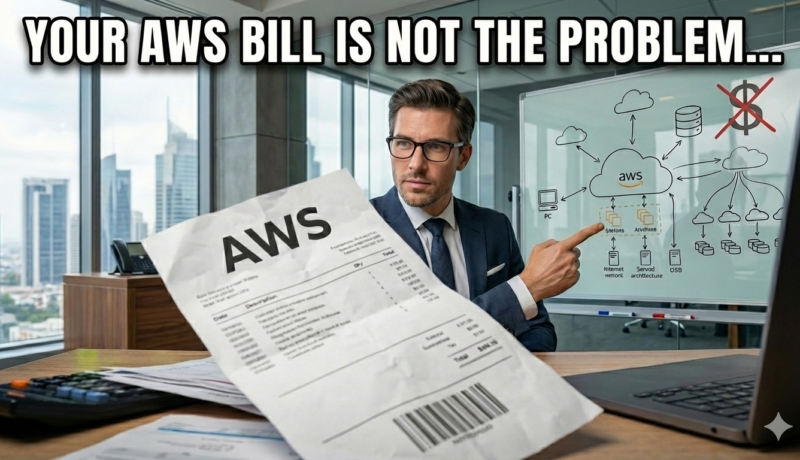

Your cloud architecture might be.
Many organizations moved to the cloud expecting cost savings, agility, and scalability.
Yet today, in conversations with CEOs, CIOs, and CFOs, I hear the same concern:
Table Of Content
“The cloud works… but it costs more than we expected.”
The reality is simple: moving to AWS does not automatically mean efficiency.
Real value comes when cloud environments are designed and continuously optimized using AWS best practices and the AWS Well-Architected Framework.
What is usually happening behind the scenes
From a Cloud & Business Solutions Architect perspective, excessive cloud spend is rarely caused by AWS itself. It usually comes from:
- Overprovisioned infrastructure “just in case”
- Non-production environments running 24/7
- Lift-and-shift architectures that were never optimized
- Lack of financial governance and cost visibility
- Limited adoption of true pay-for-use and managed services
These issues are common.
And they are completely fixable.
Cloud optimization is not just about cutting costs
When organizations assess their workloads using the AWS Well-Architected Framework, the business impact is immediate and measurable:
✅ 20%–40% reduction in AWS costs without sacrificing performance
✅ Financial predictability and fewer billing surprises
✅ Cloud platforms aligned with business growth
✅ Technology decisions driven by value, not just operations
At this point, the cloud stops being a hard-to-explain expense and becomes a strategic business enabler.
Questions every C-level leader should be asking
- Are we paying for value, or for inertia?
- Does our cloud scale with the business—or against the budget?
- Do we really understand cloud costs by product, customer, or business unit?
- Can our current architecture support growth without cost explosion?
If any of these questions raise doubts, there are likely significant optimization opportunities.
💬 A Well-Architected Review can uncover immediate savings and hidden risks in your AWS environment.
Let’s talk and evaluate whether your cloud architecture is optimizing your business—or simply keeping it running.
The cloud should not be a cost you need to justify.
It should be a competitive advantage.




No Comment! Be the first one.